What is preschool, and why does it matter?
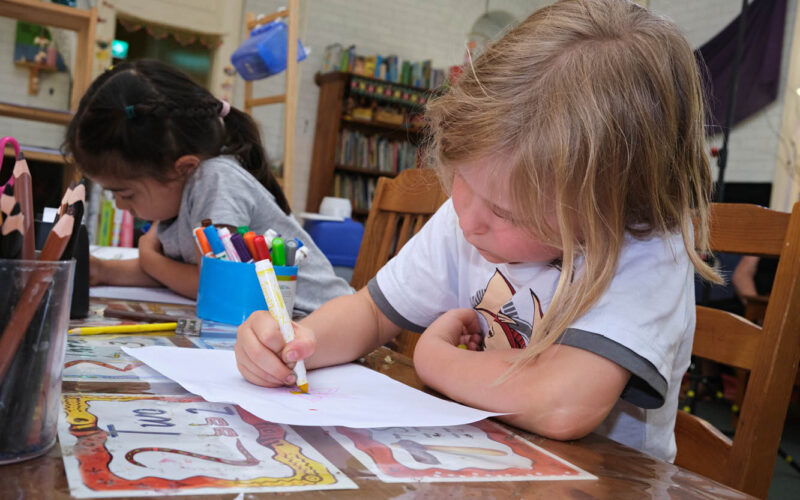
At preschool children build the foundations for lifelong learning through play, connection, and exploration. More than just learning about letters and numbers, quality preschool programs nurture children’s confidence, curiosity, social skills, emotional wellbeing and growing independence to help them prepare for starting school.
What is the difference between preschool in long day care and standalone preschools?
The main differences between preschool in long day care and standalone preschools are their operational hours and days. Both are required to offer high-quality, play-based learning programs that follow the Early Years Learning Framework to help children prepare for “big school.” Preschool programs in long day care services are typically open for 10 to 12 hours per day and usually operate for 50 to 52 weeks a year. Standalone preschools usually offer shorter days similar to school hours (eg. 9.00am to 3.00pm) during school terms and are closed during school holidays.
What to look for in a quality preschool program
- A warm, welcoming atmosphere. Notice how educators greet and speak with children. Do children look relaxed, engaged, and happy? A calm, caring environment is one of the strongest signs of quality.
- Play-based learning. Look for programs where children learn through hands-on play, discovery, and creativity, rather than formal, adult-directed instruction.
- Qualified, consistent educators. Ask about staff qualifications, experience, and how long educators typically stay. Consistent, familiar staff help children feel secure.
- Inclusive and child-safe practices. A quality program welcomes every child and family, respects diversity, and has clear child-safe policies.
- A rich learning environment. Indoor and outdoor spaces should be safe, engaging, and encourage exploration, movement, and connection with nature.
- Strong family partnerships. Find out how educators involve parents in their child’s learning and how they communicate meaningfully with families.
Some questions to ask
- What does a typical day look like for my child?
- How do you support new children to settle into the program?
- How do educators respond to big feelings and help children build social skills?
- How will you keep me informed about my child’s day and development?
- What support do you offer for children to transition to school?
- How do you approach rest, meals, and self-care routines?
Practical tips for making a choice
- Bring your child to tour the service. Watching how they respond to the environment and educators can be helpful for deciding if the program will be a good fit for them.
- Consider how welcome and informed you feel when you tour the service. Early impressions are often a good guide to whether the program is right for your child and family.
- Find out which local primary schools children attending the service typically transition to. When starting school, it can be helpful for children to transition with other children they know.
- Speak with other families. Word of mouth in your local community can offer helpful information and insights.
Choosing a preschool for your child is a personal journey. The right program is one where your child feels included and safe and is supported to grow and learn in ways that best suit them.
Contact us
If you have any questions or would like more information, please email us at childrensservices@theinfantshome.org.au.