Once Upon a Time: Tips for Fun Story Times with Children
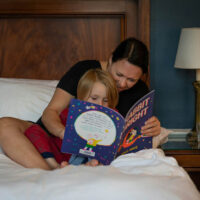
Sharing story time with your child can be a special part of everyday life. Reading together builds language, sparks imagination, and creates treasured moments of connection.
Your child may benefit from speech pathology if communication difficulties affect their ability to express themselves, understand others, participate in daily activities or eat and drink safely. This guide explains the signs families can look for and what happens during an assessment.
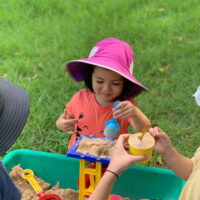
Play-based learning is a child-centred approach to early childhood education, where children learn and develop through play, exploration, creativity, and relationships. Children build their skills through hands-on, meaningful play experiences that spark curiosity, inquiry and connection.
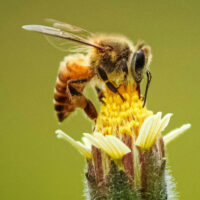
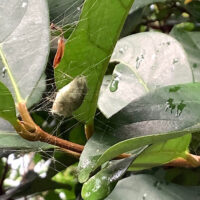
A bug (or insect) hotel provides shelter, nesting sites, and hibernation spaces for beneficial garden insects. Building one at home with your child is a fun, hands-on activity that can help connect them with nature while learning about the important role insects play in our environment.
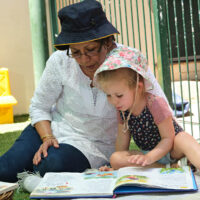
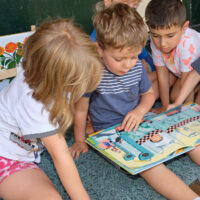
Sharing a storybook with your child is more than a nice bedtime routine. Reading together with young children, from an early age, and at any time, is a powerful way to support their early learning and development, and build foundations for language and literacy development.
At The Infants’ Home, we believe that every child has the right to feel safe, understood and included. Our inclusive approach focuses on strengths, relationships and practical supports that help all children participate in everyday play and learning in ways that work for them.
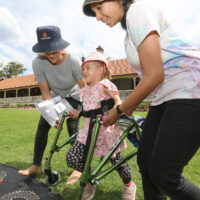
Supported playgroups play an important role in nurturing children’s development and strengthening families and communities. The Infants’ Home’s supported playgroups provide a welcoming, inclusive environment where children learn through play and families can feel connected, supported and empowered.
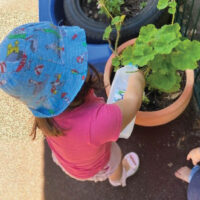
Learning to care for other living things is crucial for a child's development, fostering empathy, responsibility, and environmental stewardship. By tending plants, pets or other living things in their environment, children learn to understand the needs, feelings, and rights of others.
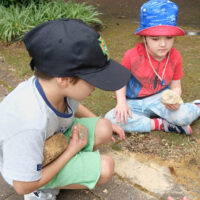
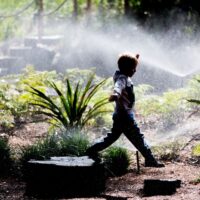
One of the most effective ways to nurture environmental responsibility in children is through nature play—unstructured, child-led experiences in natural settings that spark their curiosity and connection.
Connecting with nature boosts children’s creativity, resilience, physical health, and environmental awareness. Our outdoor classroom, which is currently under construction, is due to open in early 2026, and will be a beautiful, nature-inspired environment for play-based and child-led learning.
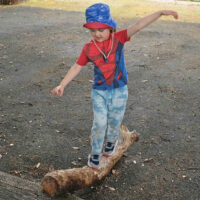
Adventurous play, often described as play that involves risk, challenge, and exploration, is a vital part of early childhood development. Whether it’s climbing, balancing, exploring nature, or creating imaginative scenarios, adventurous play helps children build confidence and life skills.
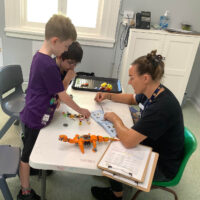
At The Infants’ Home, we believe every child deserves the opportunity to thrive. Occupational Therapy supports children’s development, helping build the skills they need to participate fully in everyday activities that are meaningful to them—from playing and learning to socialising to self-care.
Many Australian families are embracing the fun of Halloween. However, the festivities can lead to a big spike in waste and the use of materials that may be harmful to animals and the environment. Fortunately, there are some simple (and fun) ways to celebrate a greener Halloween.
At The Infants’ Home, we believe every child deserves a strong start in life, and self-esteem is a vital part of that foundation. Nurtured through loving relationships, encouragement, and opportunities to explore, self-esteem helps children feel capable, try new things, and grow with confidence.
For Early Childhood Educators’ Day 2025, we proudly celebrate The Infants’ Home’s incredible Integrated Team of educators and allied health professionals. Their dedication, compassion and expertise positively shape the lives of children and families every single day.
At The Infants Home, Child Protection Week is not just a moment in time—it’s a reflection of our ongoing commitment to embedding child safe practices and standards into every aspect of our work with children and families.
Reading with your child is about so much more than bedtime stories—it’s a way to spark their imagination, build their language skills, and create special moments together.
Our values around nature play guide the way in which we nurture children’s use of the outdoor classroom space. Our educators thoughtfully guide children’s experiences, building on their interests and promoting their learning through child-led play, inquiry and freedom to experiment and explore.
The first five years of a child’s life are a time of rapid development, especially when it comes to communication and language. For some children, however, speech and language don’t always develop as expected—and that’s where speech pathology can make a big difference.
The Infants’ Home’s children continue to explore the outdoor classroom space weekly and to enjoy the many learning opportunities that child-led nature play and immersion in the natural environment brings.
The Infants’ Home integrates early intervention support for all children into our mainstream early education programs. Our speech pathologists and occupational therapists work alongside our educators to support each child's learning, development and wellbeing.
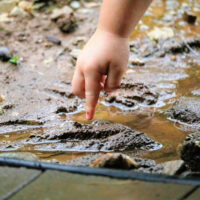
Messy play has many benefits for children’s development. However, some children may be hesitant or have a sensitivity to some sensory inputs. Introducing messy play using a child-centred approach helps ensure they can engage in ways that are comfortable for them.
At The Infants’ Home, we use an ‘emergent curriculum’ approach to support children's learning. This approach puts children's interests, ideas, and natural curiosity at the heart of the learning process.
Each visit to the outdoor classroom is an opportunity to engage with the natural world—through play, observation, movement, and curiosity. These experiences not only support physical development but foster a deep respect for the environment and each other.
The Outdoor Classroom will comprise of three key areas - The 'Wild Play' Zone, The 'Open Transition' Zone, and The 'Sensory Play' Zone.
Biting is both one of the most common and one of the most challenging issues that parents, educators and children themselves experience in childcare settings.
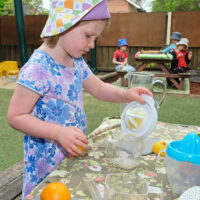
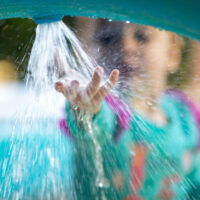
Water play, especially in warmer weather, is a fantastic way for young children to explore, learn, and have fun while staying cool.
The Circle of Security Parenting Program is an evidence-based program which draws on 50 years of research into attachment. While designed for parents, the program can also guide educators to connect with children and to read and understand what they are ‘saying’ through their behaviour and actions.
While starting school is an exciting milestone for children and their family, it is also a big adjustment and can be a little daunting for all concerned. Fortunately, there are many simple things that parents and carers can do to help their child (and themselves) experience a positive transition.
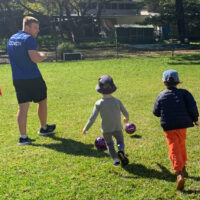
The recent Soccajoeys program for preschool children at The Infants’ Home provided many opportunities for children to develop a range of skills, build their confidence and, most importantly, have fun.
Experiencing big feelings (or ‘tantrums’) is a normal part of early childhood development. Parents and carers play an important role in helping their child to manage their big feelings and to learn to self-regulate their emotions as they develop.
The Infants’ Home’s Fathers’, Male Carers and Children’s Playgroup is a program where dads, male carers and children can come together to have fun and connection with each other.
The Infants’ Home brings together (or ‘integrates’) early intervention and early childhood education and care within our daily childcare programs for all children. This helps ensure that every child receives the level of support they need to learn, develop and thrive in the critical early years.
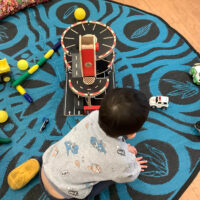
Small world play offers many benefits for children’s learning and development. It helps children to process and learn about the world around them as they explore real and imaginary situations within miniature play settings.
Nature play, in which children explore, play and learn in natural environments, offers many benefits for children’s learning, development, health and wellbeing.
Equity and inclusion for all members of The Infants’ Home’s community is central to our mission and our everyday work. Our community includes our children, families and staff as well as others in the wider community with whom we work.
Attending a playgroup is a wonderful way for children and their parents and carers to come together regularly in an informal setting where they can play, learn and connect with others.