What Is Play-Based Learning, and Why is it Important in the Early Years?
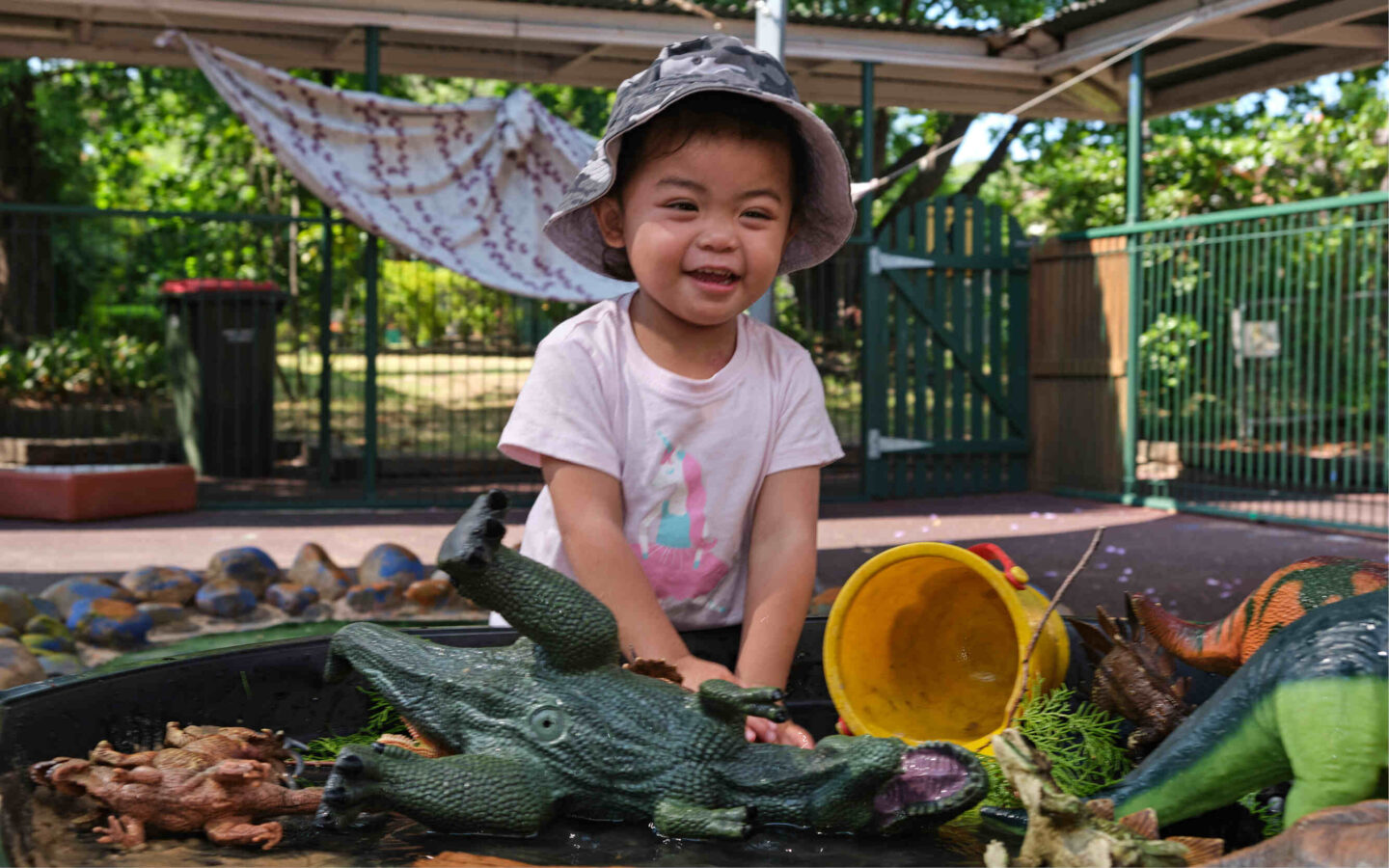
For young children, playing is much more than just fun. It is how they make sense of the world around them. When a baby shakes a rattle, a toddler pours water between cups, or a preschooler creates a pretend café, they are learning through doing.
Play-based learning supports every area of a child’s development. It helps them build language as they talk, listen, sing and share ideas. It strengthens physical skills through climbing, running, digging, painting and manipulating small objects. It also supports social and emotional development, as children learn to take turns, solve problems, express feelings, and build relationships. Play-based learning experiences are unhurried and flexible, allowing children to fully explore them without interruption.
Educators at The Infants’ Home support and intentionally guide play-based learning by creating engaging and developmentally appropriate environments. They actively join children’s play to extend their thinking, curiosity, and social skills, while intentionally facilitating specific skill development by embedding opportunities within play and daily routines. For example, by using counting games to build early numeracy, storytelling and role-play to strengthen language and communication, construction play to develop problem-solving and spatial awareness, and guided social play to support sharing, turn-taking, and emotional regulation. Our Educators also recognise that children learn best in smaller groups, as these support connections and relationships.
Importantly, play-based learning allows children to follow their interests. When children are engaged in something that matters to them, learning becomes more meaningful.
The Benefits of Play-based Learning:
It helps children to:
- Build confidence and independence
- Develop language and communication skills
- Learn to share, take turns and work with others
- Express emotions and build resilience
- Strengthen problem-solving and critical thinking
- Grow creativity and imagination
- Develop fine and gross motor skills
- Explore early maths and science concepts
- Build early literacy skills through stories, songs and pretend play
- Make sense of the world around them through hands-on experiences.
For young children, play-based learning also lays out the foundations for future development and success as they practice making decisions, trying new things and learning from mistakes in a safe and supportive environment.
Supporting Play-based Learning at Home
Parents and caregivers can support play-based learning in simple everyday ways. This might mean reading together, singing songs, going for a nature walk, building with blocks, playing dress-ups, or simply allowing time for unhurried play at home. The goal is not to direct every moment, but to create opportunities for children to explore, discover and enjoy.
When we value play, we value childhood. Play-based learning recognises that young children are capable, curious and full of potential, and that some of the most important learning happens when they are free to play.
Contact Us
If you have any questions or would like more information, please email us at childrensservices@theinfantshome.org.au.