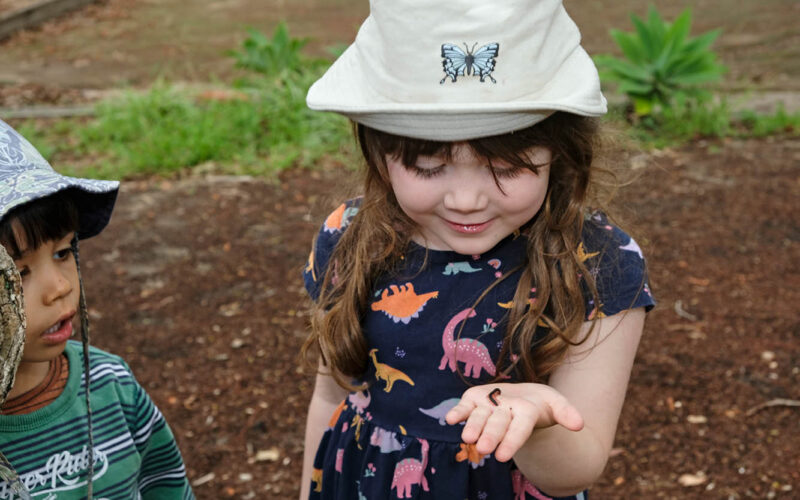
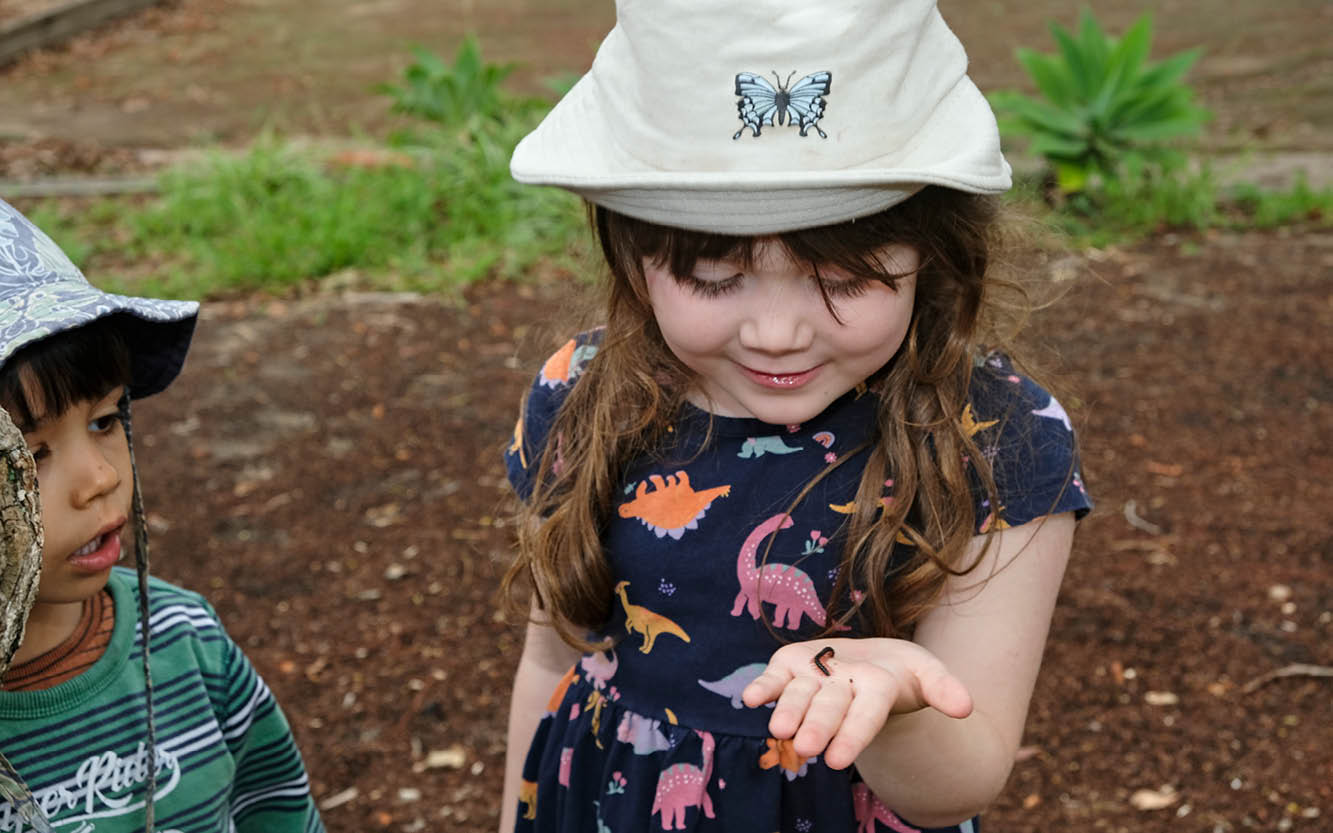
Having hands-on, guided support to understand, connect with and care for other living things can help build children’s self-confidence, reduces stress, and develop emotional maturity.
Tips for helping children learn to respect and care for other living things:
- Lead by example: Children often mirror the actions and language of the adults around them. Treating insects, animals and plants with respect, care and patience, helps children learn to do the same.
- Help children notice the living things around them. Nature walks, garden play and opportunities to observe insects, birds, small animals and plants in both indoor and outdoor settings help children understand that they share their world with many living things.
- Build empathy. Teach children that living things feel pain, joy, fear, hunger and thirst just like humans. Use open-ended questions to help children consider how other living creatures may feel. For example, “How do you think the beetle might feel if we catch it?”, “How do we know if our plants need water”, “What do you think will help the fish in our tank feel healthy and safe?” or “How do you think the spider would feel if we stepped on it?”
- Encourage children to help protect and care for living things. For example, involve them in providing safe water stations outside for birds and insects, encourage them to help gently catch and release insects and spiders found inside, or build a bug hotel with them.
- Model gentle interactions. Support children to approach animals calmly and slowly, to use soft voices, and to touch and handle animals and plants gently.
- Establish boundaries. Help children to give animals the time to rest, eat, sleep or simply go about their natural activities without being touched or handled. Quietly watching living things without interference also helps children learn about needs and habits of different animals.
- Involve children in hands-on care. Involve children in feeding pets, watering and weeding plants and gardens, and keeping the environments that pets and other living things are housed in safe, clean and secure.
- Education through stories, films and research. Read books, watch films and research information that helps children learn about the needs of living things and that highlight the importance of compassion, care and respect.
Helping young children learn about needs and feelings of other living things, encouraging kind and caring interactions and building empathy and respect for the world around supports them to grow into thoughtful caretakers of our shared world.
Contact us
If you have any questions or would like more information, please email us at childrensservices@theinfantshome.org.au.